

The best wine glasses: what to look for when choosing?
The best wine glass does not exist as an absolute category. What constitutes the best glass depends on what you are drinking, how you use it, and what you value. Nevertheless, there are a few criteria that apply to every good wine glass: the correct shape for the type of wine, clear glass without color or pattern, a comfortable stem, and a stable base. A glass that meets these conditions performs its job well, whether it's for an everyday bottle or a special wine at a festive dinner.
Why the shape of the glass matters
The bowl shape determines how aromas gather and how the wine reaches your tongue. A large, round bowl gives red wine space to breathe. The wide opening allows aromas to be released and ensures your nose is close to the wine when you drink. A narrower bowl keeps white wine cooler and directs its fresh scents more precisely upwards. A flute for champagne does something similar: the narrow shape keeps the bubbles intact longer and concentrates the carbonation towards the nose.
A glass with ample space in the bowl is also practical: you can swirl without the wine spilling over the edge. Swirling is not an affectation; it accelerates aeration and releases more aromas.
Crystal glass or regular glass?
Wine glasses come in two main materials: regular glass and crystal glass. Regular glass is thicker, heavier, and less clear. Crystal glass is thinner, lighter, and more transparent. That thin wall makes a noticeable difference when drinking: the rim of the glass feels more refined on the lip, which enhances the drinking experience.
Historically, crystal glass contained lead oxide, which made the material extra clear and heavy. Modern crystal glasses are lead-free and achieve the same clarity and thinness without the disadvantages of lead. At Mémoire, our wine glasses are made from high-quality lead-free crystal glass, ensuring a stable base, uniform wall thickness, and a clear appearance suitable for daily use.
The Amore wine glasses from Mémoire
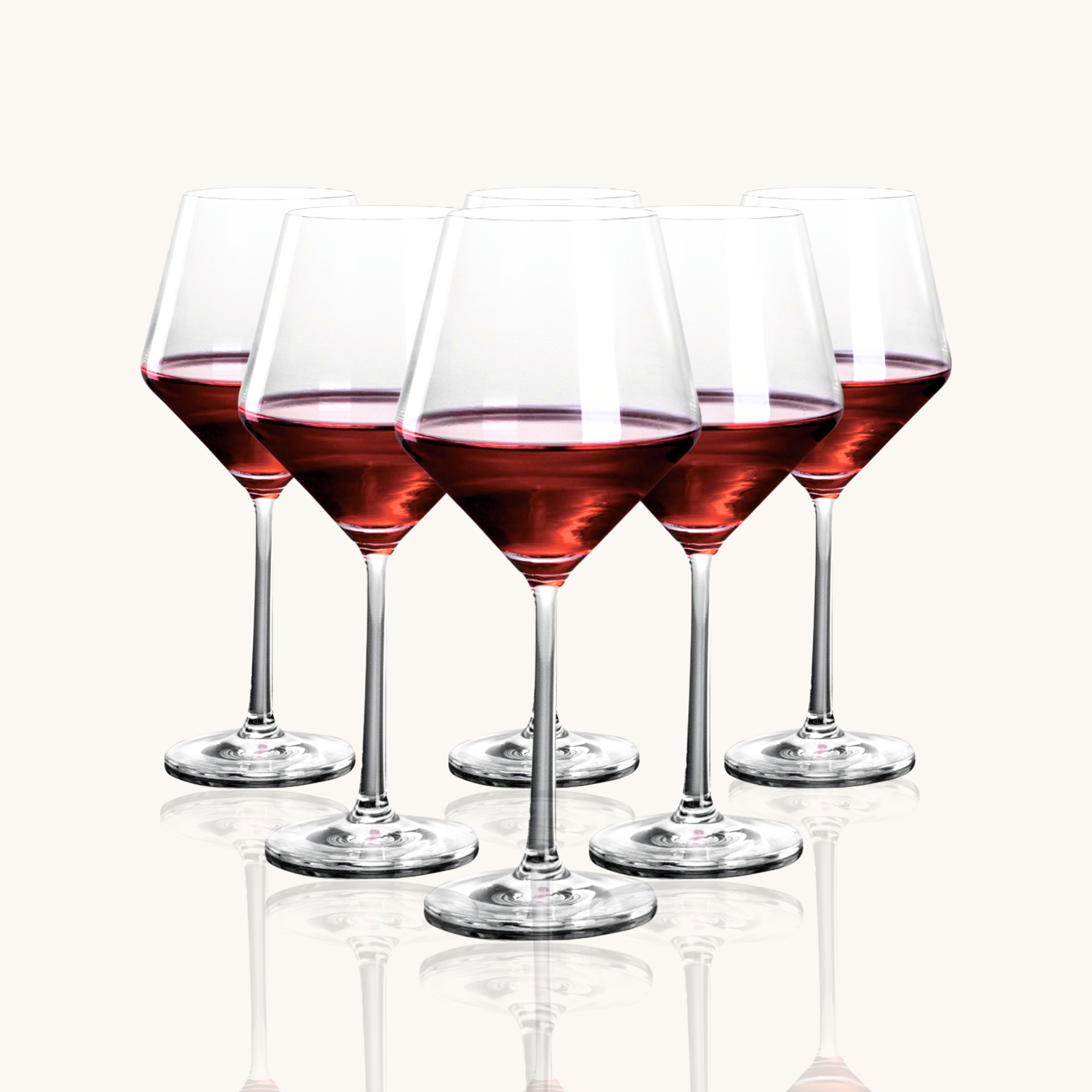
The Amore wine glasses from Mémoire are available in sets of two and six. The bowl is based on a subtle heart-line shape and has a capacity of 450 ml, spacious enough for red wine but also suitable as a universal wine glass. The glass is 24.5 cm high with a diameter of 6.5 cm and weighs 121 grams. This combination of height and weight makes the glass pleasant to hold without feeling heavy.
The glasses are made from high-quality crystal glass and are suitable for daily use. They are available as a set of two for smaller households and as a set of six for those who frequently host guests or want a complete service.
What to look for when buying wine glasses?
A few practical points to consider. Firstly, the capacity of the bowl: for red wine, a capacity of 400 to 600 ml is common. For white wine, 300 to 400 ml is sufficient. For champagne and sparkling wine, a flute of 150 to 250 ml is standard. Secondly, the stem: a long stem prevents you from warming the bowl with your hand. This is particularly relevant for white wine and champagne, which are served chilled. Thirdly, stability: a wide, flat base prevents tipping, especially on a busy table.
Also pay attention to the finish of the rim. A cut rim feels more pleasant than a molded rim and gives the glass a more refined appearance. With good wine glasses, the rim is thin and even, without rough spots or irregularities.
How many wine glasses do you need?
For daily use with two people, a set of four glasses is sufficient. You will always have a clean glass at hand, even if the dishwasher isn't running immediately. If you frequently entertain guests, a set of six or twelve glasses is more practical. It's also useful to have a separate glass for each wine type: red wine glasses, white wine glasses, and champagne flutes complement each other, so you don't have to switch glasses for every type of wine. Want to know how many glasses a bottle of wine yields? Read how many wine glasses come from a bottle of wine.
How best to store wine glasses?
Preferably store wine glasses upright in a cabinet, with enough space between them so they don't touch. Storing them upside down on a rack protects the rim from dust but increases the risk of breakage if the rack is not stable. In a cabinet with a soft lining, glasses are safer. Ensure that glasses do not clink together when putting them away, as crystal glass is more fragile than regular glass.
Champagne glasses separately or as part of a set?
Champagne flutes are a separate category. They are narrower than red or white wine glasses and retain bubbles longer. For those who regularly drink champagne or prosecco, a separate set of flutes is a valuable addition. Besides the Amore wine glasses, Mémoire also offers champagne glasses. View the complete wine glass collection for an overview of all available models and sets.
Combining wine glasses with a carafe
A beautiful wine glass is best showcased in combination with a suitable carafe. A carafe helps aerate red wine and gives your table a polished look. Explore Mémoire's range of decanter carafes and carafes to see what combinations are possible.


